
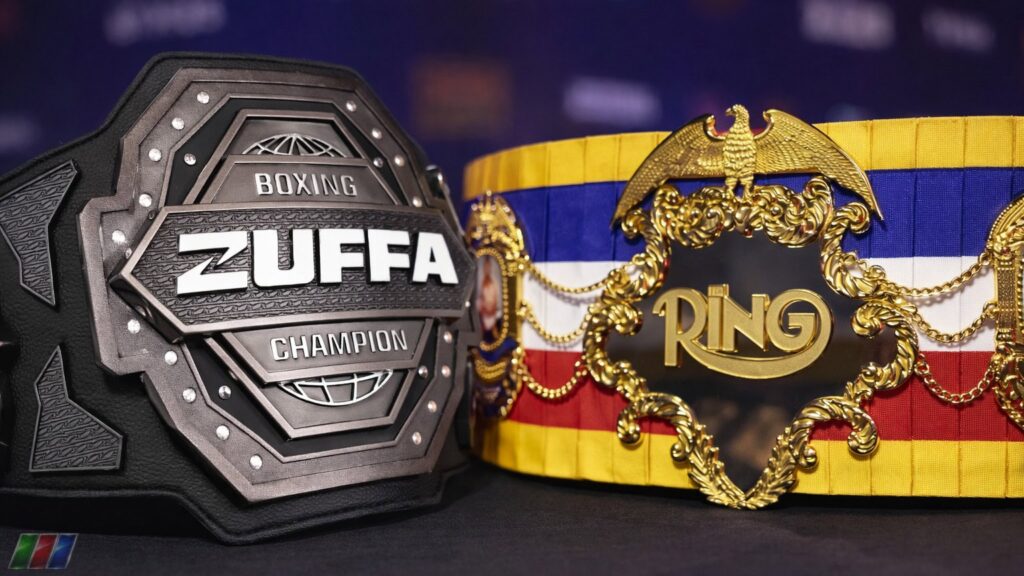
Zuffa Boxing’s alignment with The Ring championship model is already exposing an early gap between principle and practice, as the promotion’s roster and matchmaking fail to reflect the standards the title was built on.
As World Boxing News previously reported when examining the circumstances surrounding Jai Opetaia’s bout with Brandon Glanton, the involvement of The Ring title raised early questions about how its long-standing rules are now being applied.
Those concerns have only grown when viewed against the wider Zuffa Boxing structure.
Ring Standard
For decades, The Ring championship carried weight for one simple reason: it was typically awarded when the number one and number two fighters in a division faced each other.
That principle separated the belt from the sport’s fragmented sanctioning system and gave it a lineal-style credibility.
When The Ring title was on the line, it usually meant the best were fighting the best.
The model still exists on paper in divisions such as light heavyweight, where Dmitry Bivol and Artur Beterbiev have defined the modern benchmark for a true one versus two.
The Zuffa Link
Zuffa Boxing’s launch has been closely tied to that same championship model, with Turki Alalshikh connected to both the promotion and The Ring itself.
The expectation is straightforward.
If Zuffa is aligning with The Ring, it should be delivering the same standard — fights between the top two fighters in each division.
The Gap
However, the current landscape tells a different story.
Zuffa Boxing has signed 94 fighters, yet a review of the latest Ring rankings as of this week shows:
- Only Jai Opetaia holds a Ring championship
- A limited number of fighters appear inside the top ten of their divisions
- None are positioned in a true number one versus number two matchup
Even Opetaia’s own fight with Brandon Glanton fell outside that structure, with Glanton ranked well below the level traditionally required for a Ring title bout.
Elsewhere on the roster, names such as Efe Ajagba (number 8) and Conor Benn (number 4) are present in the rankings, but none are currently aligned in matchups that reflect the number one versus number two model.
What’s Missing
The issue is not a lack of fighters. It is a lack of alignment between the stated model and the reality.
Across boxing, true number one versus number two fights remain rare. But if Zuffa Boxing is positioning itself alongside The Ring championship — a title built on that exact standard — the expectation changes.
At present, the promotion has scale, visibility, and backing.
What it has yet to show is a willingness or ability to deliver the matchups that would validate the system it appears to support.
The Bigger Picture
The Opetaia-Glanton situation raised the first questions. The broader roster now reinforces them.
For now, the gap between principle and practice is not theoretical — it is already visible.
It may take time for Zuffa to reach full alignment with The Ring Magazine standard across its events.
The question, then, is whether The Ring is prepared to maintain those standards as Zuffa expands its events.
For now, the direction is still taking shape.
About the Author
Phil Jay is the Editor-in-Chief of World Boxing News (WBN) and a veteran boxing reporter with 15+ years of experience. He has interviewed world champions, broken international exclusives, and reported ringside since 2010. Read full bio.